

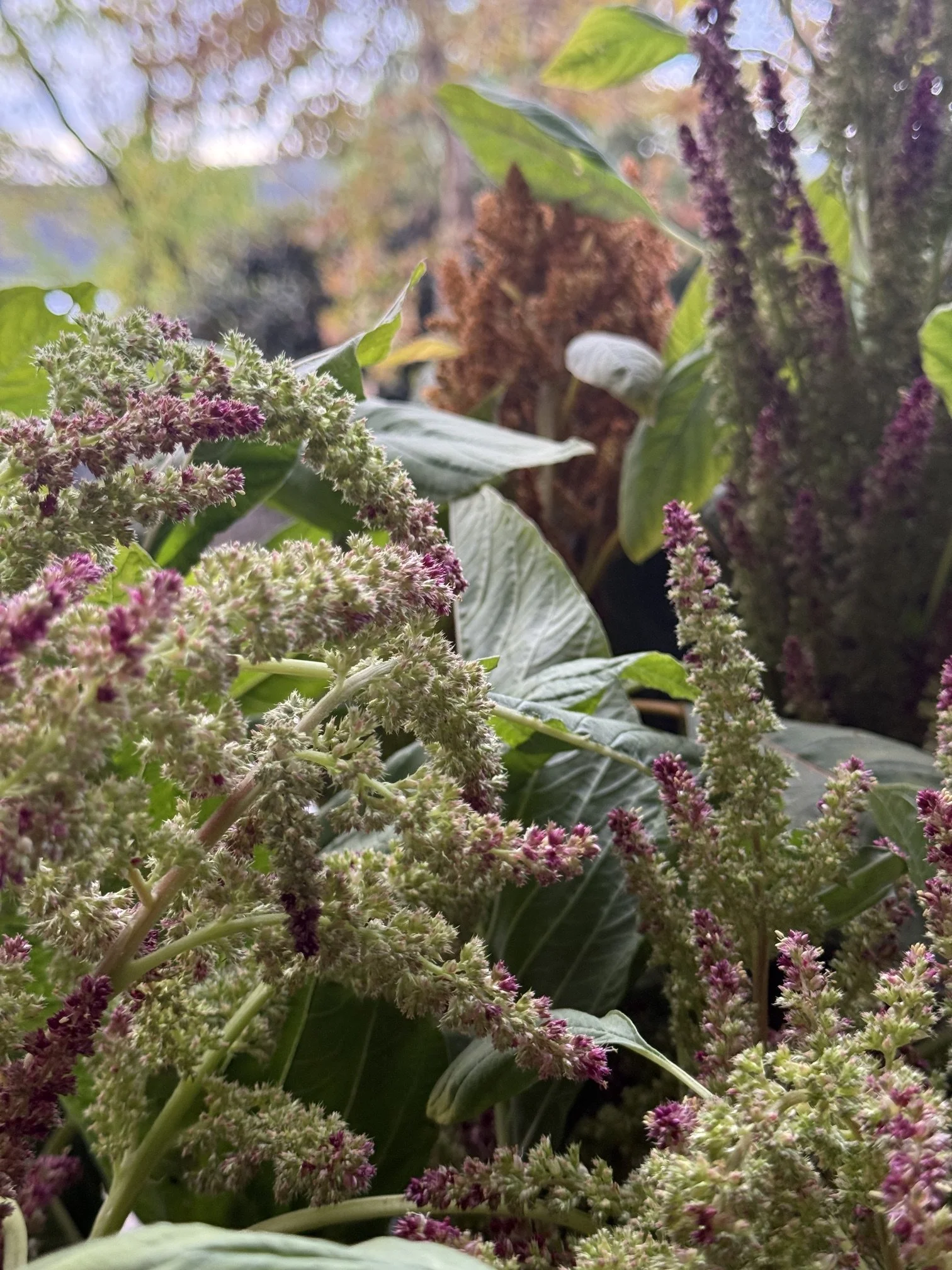
There's a point every fall when the amaranth at Front Porch Farm in Healdsburg stops being a plant and starts being an event. The stalks shoot up past waist height, thick and sturdy as a broom handle, and then the plumes let go. Long ropes of deep wine and dusty coral spill toward the ground like velvet tassels, heavy enough to sway when someone walks by.
It's growing right now, and it's been finding its way into nearly everything we touch.
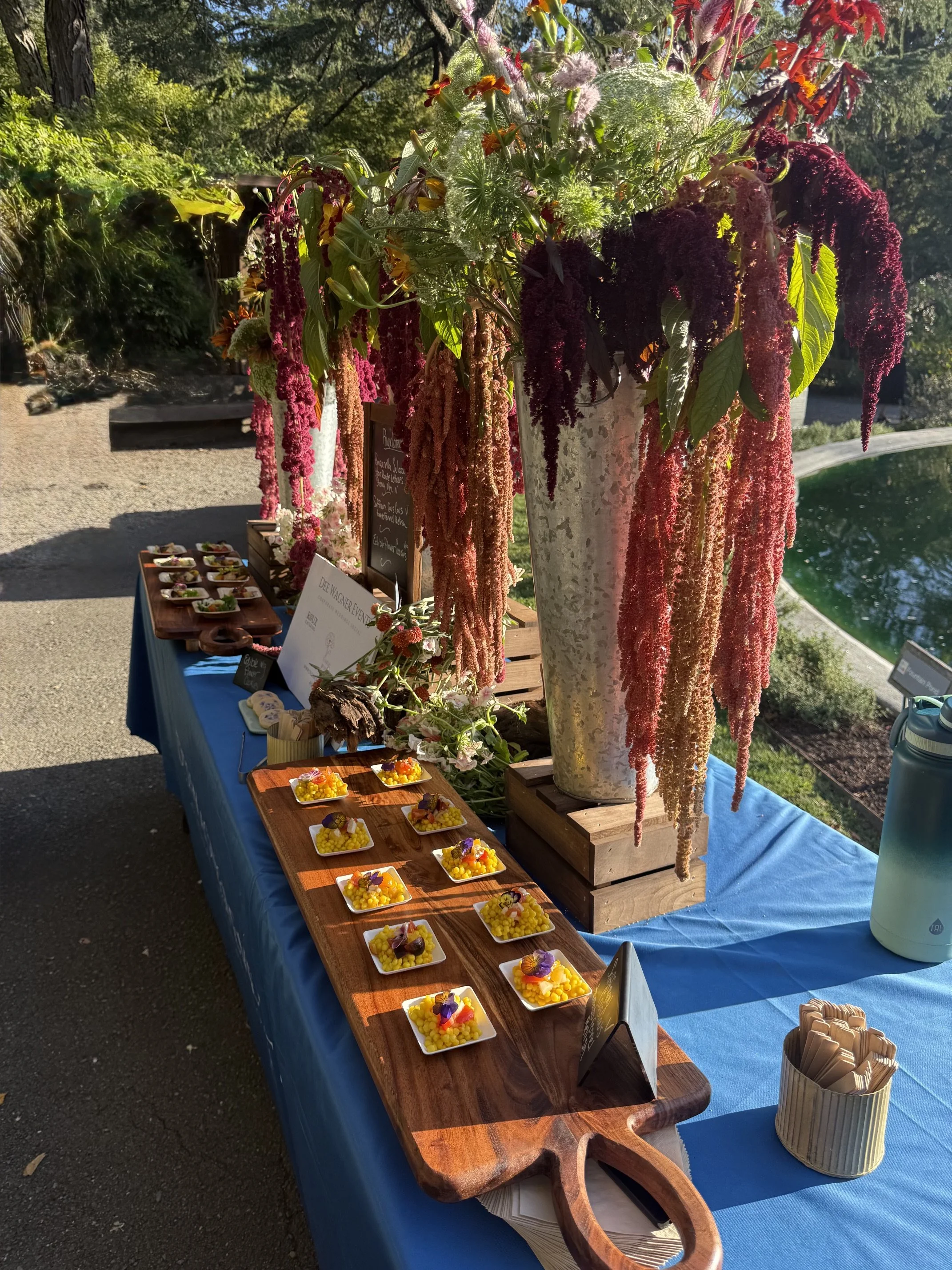
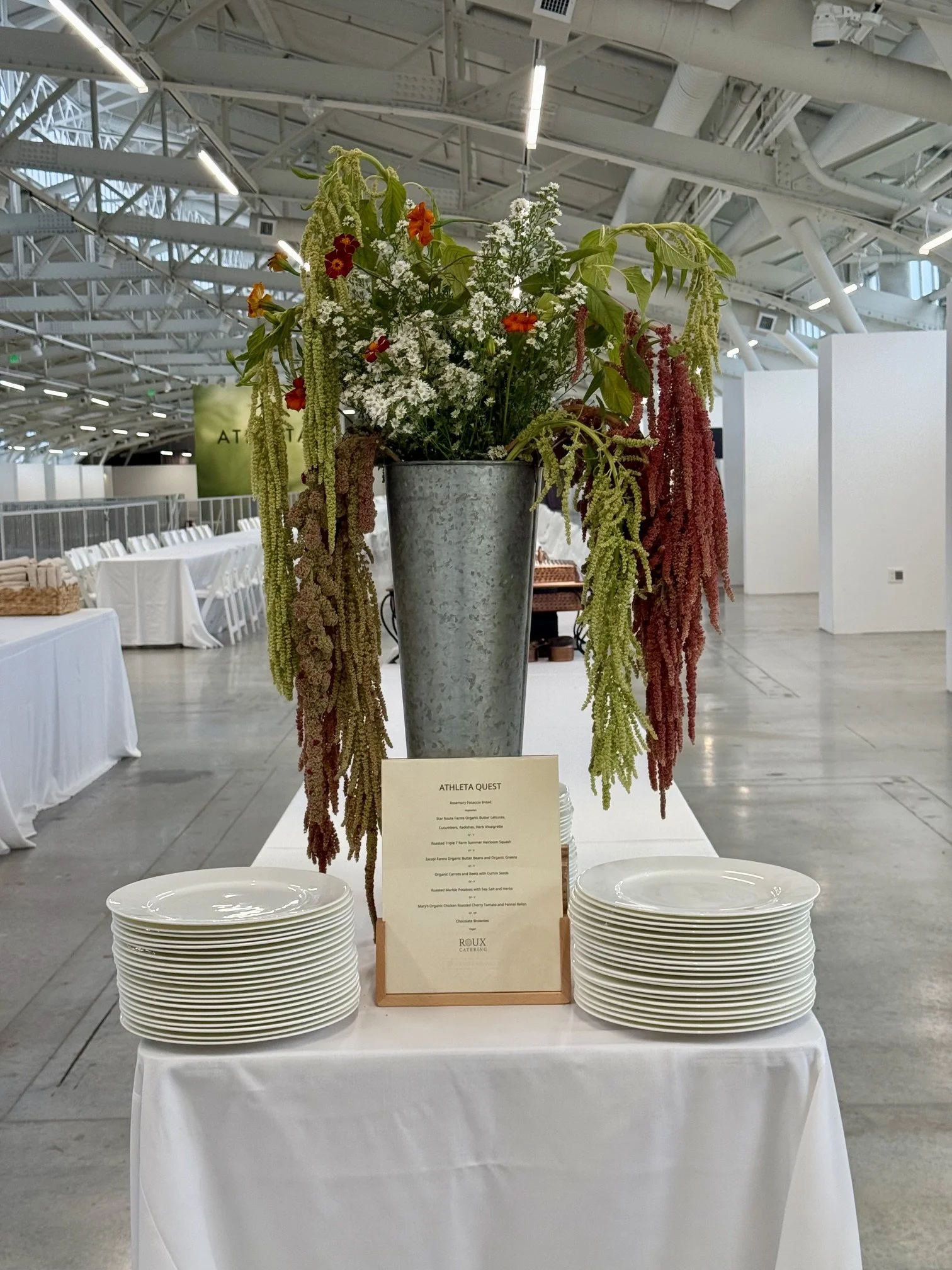
On our food tables, a few cut stalks change the whole feel of a spread. Laid along a grazing table between wooden boards of cheese and roasted squash, the plumes pull the eye down the length of the table and make a buffet feel like a harvest. Tucked into tall vessels at the corners, they give a station height without walling it off. Amaranth holds its shape through a long event and doesn't wilt under warm light, so a table set at four o'clock looks the same when the last guest leaves.
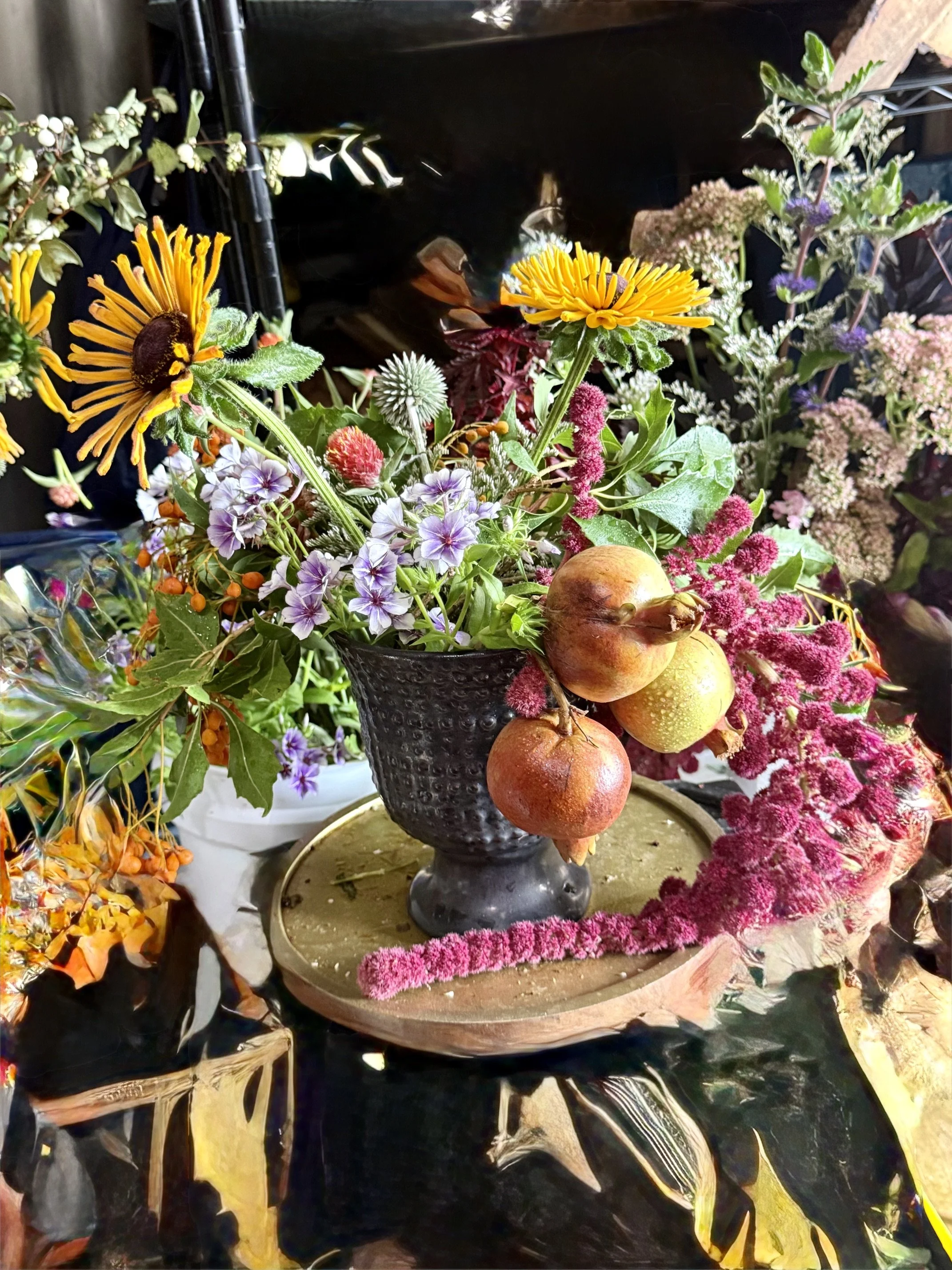
In our floral design, it does something few flowers can: it moves. Most arrangements stand still. Amaranth drapes, cascades and trails off the edge of a compote bowl or a long farm table. Paired with late dahlias, celosia and scabiosa, it turns a centerpiece into something with a bigger-than-life feeling. The stalks are strong enough to anchor a large installation, and the plumes are playful enough to soften it.
There's history in it, too. Amaranth was grown for centuries across the Americas as a grain, and its leaves are eaten as greens in kitchens around the world. When it shows up on our tables, it's a reminder that the line between the garden, the kitchen and the vase was never as clear as we pretend.
That's the part of farm-to-table we love most. It isn't only about where the food comes from. It's about letting the season set the tone for the whole room. When we source flowers from growers like Front Porch Farm, the same way we source produce from farms we know by name, the table tells one story from the centerpiece to the plate.
Amaranth won't last long. A few more weeks and the plumes will fade and the fields will turn over for winter. If you're planning a fall wedding, a harvest dinner or a holiday party in Marin, San Francisco or Wine Country, this is the window.
Want amaranth on your table? Let's talk about your event →